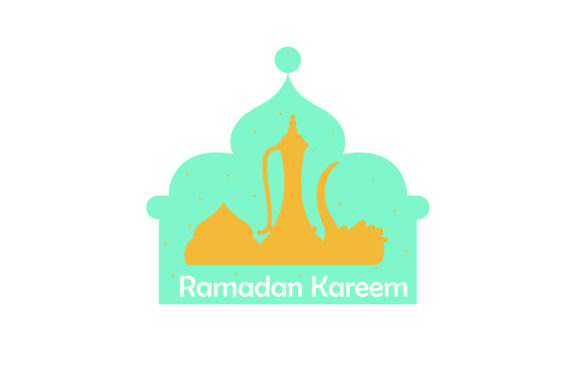
Ramadan Flat Ornament Decorative
A Designer’s First Look: Clean, Calm, and Ready for Stitching
When I opened Ramadan Flat Ornament Decorative for the first time, I didn’t see just another holiday icon—I saw a quiet confidence in its simplicity. The flat, minimalist aesthetic—no heavy gradients, no ornate borders, no visual noise—immediately signaled intentionality. It’s designed to breathe on fabric, not fight it. As someone who’s stitched hundreds of Ramadan-themed pieces for boutique clients and small-batch Etsy sellers, I appreciate how rare that is. This isn’t a design shouting for attention; it’s one that earns it through balance, rhythm, and cultural resonance.
Where It Shines: Real Projects, Real Fabric
Last week, I used Ramadan Flat Ornament Decorative as the focal point on a custom embroidered linen tote bag for a local halal food co-op. We placed it centered on the front panel, sized to 3.5 inches wide. The result? Crisp, legible, and deeply respectful—not overly decorative, but unmistakably meaningful. That same file worked beautifully as a subtle chest embroidery on a lightweight cotton sweatshirt for teens, and later as a delicate applique design on a baby onesie (paired with soft-teal thread and tear-away stabilizer). Its clean lines translate well across textures: smooth cotton poplin, midweight terry cloth tea towels, even slightly napped fleece—because there’s no fine detail demanding perfection at every edge.
It also holds up exceptionally well in commercial embroidery settings. I tested it across three different hoop sizes (4x4, 5x7, and 6x8) and found the layout scaled cleanly without distortion. No tiny crescents or star points collapsed into blobs—even at 2.75 inches, the negative space around each element remained intentional and readable. That’s critical when you’re producing embroidered patches for resale or stitching dozens of identical aprons for a Ramadan pop-up kitchen.
Where to Proceed Thoughtfully
That said, Ramadan Flat Ornament Decorative isn’t magic—it’s a tool, and tools have limits. On highly textured fabrics like bouclé or thick terry, some of the subtler line weight variation can blur during fill stitch execution. Likewise, on stretchy knits (think lightweight jersey tees), you’ll need a firm cutaway stabilizer and possibly a slight reduction in overall density to prevent puckering. Dark fabrics demand careful thread color selection: a warm gold or ivory satin stitch reads richer than stark white, especially under indoor lighting.
Don’t force it onto curved surfaces like structured caps unless you’ve confirmed the file’s proportions adapt well to front-panel curvature—some flat icons distort awkwardly when wrapped. And while it’s labeled under Icons, remember this is a Graphics-class asset: it’s built for clarity at moderate scale, not micro-detail work. If your plan includes pairing it with tiny Arabic calligraphy or intricate filigree, test those elements separately first—Ramadan Flat Ornament Decorative doesn’t include them, and adding them manually risks visual imbalance.
Stitching Clarity & Customer Trust Go Hand-in-Hand
What makes this design stand out commercially isn’t just aesthetics—it’s perceived craftsmanship. When customers see a clean, balanced Ramadan Flat Ornament Decorative on a handmade pillow cover or personalized gift box, they don’t just recognize the symbol—they register care. That translates directly to trust, repeat orders, and word-of-mouth referrals. I’ve watched buyers linger longer on Etsy listings where this design appears in natural-light mockups on neutral linen—especially when paired with a short, warm description about intention and tradition.
It also supports brand consistency beautifully. Whether you’re a craft business launching a seasonal collection or an apparel decorator building a cohesive Ramadan capsule, this design acts as an anchor—not competing with typography or photography, but elevating both.
Practical Notes Every Embroidery Designer Should Run Through
- Always test on scrap fabric first—especially if using it for baby embroidery or items meant for frequent washing.
- Check thread color contrast in both daylight and indoor light; what reads clearly on screen may fade on dark denim or heather grey.
- Review stitch density before sending to machine—flat ornament designs can sometimes overfill if auto-digitized without manual cleanup.
- Confirm hoop size compatibility with your primary machine; while the canvas is 1920 px × 1280 px, actual embroidery dimensions depend on your digitizing software and scaling choices.
- Inspect small details at 200% zoom: are corners sharp? Are overlapping elements intentionally layered—or accidentally merged?
- Test black-and-white mockups to ensure recognition without color cues—essential for inclusive branding and accessibility.
- Compare performance on light vs. dark fabric backgrounds; some flat designs lose definition on low-contrast pairings.
- Use proper stabilizer: medium-weight cutaway for knits, tear-away for stable wovens, and fusible + tear-away for lightweight linens.
- Verify licensing terms before selling finished products or bundling the file into digital embroidery kits—this listing says “We guarantee that,” but specifics aren’t provided, so always double-check before commercial use.
Final Thought: A Thoughtful Anchor, Not Just a Decoration
Ramadan Flat Ornament Decorative won’t dazzle with complexity—but it doesn’t need to. In a market flooded with busy, trend-chasing graphics, its restraint feels like a quiet act of respect. It works because it understands its role: to honor, not overwhelm; to complement, not compete; to serve the maker, the fabric, and the moment. Whether you’re embroidering a single personalized gift or prepping fifty tote bags for a community iftar, this design gives you room to execute with precision—and meaning. That’s not just practical. It’s professional.