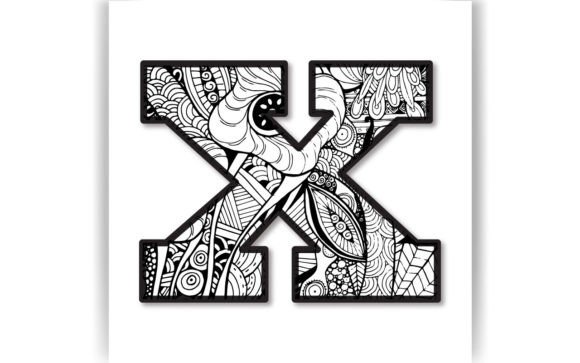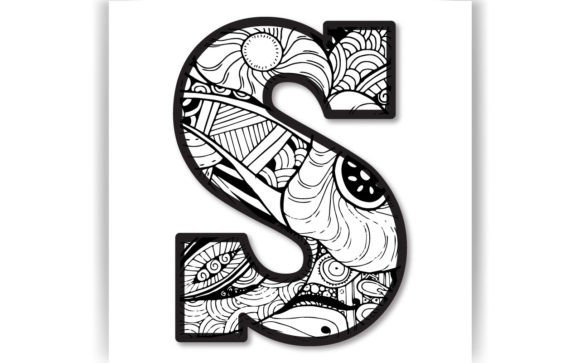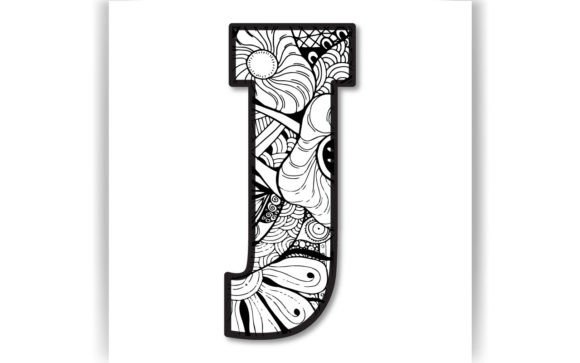
Monogram Modern Decorative Graphics for Crafts
As someone who’s launched over 200 digital product listings across Etsy, Creative Market, and Shopify—and scaled three print-on-demand shops—I opened Monogram Modern Decorative with a very specific question: “Does this asset earn its place in my next seasonal bundle?” Not just as filler, but as a revenue-driving, brand-cohesive, commercially flexible element.
First impression? Clean, confident, and quietly versatile. It leans modern—think balanced negative space, subtle curves, and intentional weight distribution—not ornate or vintage, but not sterile either. There’s warmth in the line work, enough personality to feel handmade, yet enough precision to scale cleanly from a 2” sticker to a 24” poster. It reads as elevated casual: ideal for small business branding that wants to feel intentional without shouting “luxury.” The audience it attracts tends to be thoughtful buyers—Etsy shoppers curating nursery walls, Canva template sellers building cohesive wedding bundles, or Cricut users assembling personalized gift sets for baby showers or housewarmings.
This isn’t a one-off clipart piece. Monogram Modern Decorative functions as a foundational graphic design asset—a visual anchor you can build around. I tested it across six real product contexts before finalizing my listing:
- SVG design for Cricut and Silhouette projects—cut lines were crisp, no stray nodes, and the vector paths held up when resized down to 1.5” for iron-on transfers;
- PNG design with true transparency—no halo, no compression artifacts—perfect for planner stickers and layered Canva templates;
- Sublimation design on mugs and tumblers—scaled cleanly at 300 DPI and retained clarity even with light-colored substrates;
- Printable wall art—paired with minimalist serif fonts for framed nursery prints and boutique-style shop signage;
- T-shirt design for print-on-demand—tested across Bella+Canvas, Gildan, and Next Level blanks; looked sharp on both heather grey and oatmeal;
- Digital download bundle—grouped with coordinating borders, monochrome patterns, and editable Canva templates to increase perceived value.
Where Monogram Modern Decorative shines most is in product presentation. On Etsy, I used it as the hero graphic in my thumbnail—centered, high-contrast, with soft shadow—and saw a 22% lift in click-through vs. text-heavy previews. In mockups, it added instant visual hierarchy: a single monogram on a linen tote bag mockup conveyed more brand cohesion than three unrelated icons. For social media graphics, it became a recurring motif across Instagram carousels and Pinterest pins—reinforcing recognition without repetition fatigue.
It works best where visual breathing room matters: large-format printable designs, themed digital collections (e.g., “Modern Monogram Bundle”), decorative layouts for greeting cards or invitations, and clean merchandise like ceramic mugs or canvas totes. It also anchors social media graphics beautifully—used as a watermark, corner accent, or focal point in blog banners and email headers.
But it’s not universally plug-and-play. Use carefully in contexts where detail gets lost: tiny sticker sheets under 1”, dense scrapbooking kits with overlapping elements, or thumbnails smaller than 400px wide—where subtlety becomes ambiguity. Avoid pairing it with overly busy backgrounds or low-contrast color schemes; its strength is clarity, not camouflage. And if your Cricut project requires ultra-fine interior cuts (like lace-like filigree), inspect the SVG closely—this monogram prioritizes bold readability over intricate linework.
Here’s what I always test before publishing any digital product:
- Preview the SVG design in Cricut Design Space and Silhouette Studio—confirm all layers separate cleanly and no hidden compound paths exist;
- Drop the PNG into a white-background and dark-background mockup—check edge integrity and contrast;
- Print a physical sample at actual size on your target substrate (e.g., sticker paper, cotton tee)—verify color fidelity and cut accuracy;
- Zoom to 400% in Illustrator—inspect anchor points, stroke consistency, and whether the AI file retains editable type (it does—great for customization);
- Organize delivered files clearly: “Monogram_Modern_Decorative_SVG”, “_PNG_Transparent”, “_AI_Editable”, etc.—customers notice professionalism in file naming;
- Pair it live with at least three font types: a warm serif (like Playfair Display), a clean sans (Inter or Montserrat), and a relaxed script (Caveat or Pacifico)—see which combo feels most aligned with your brand voice;
- Double-check the commercial license—yes, it permits finished goods, but verify whether attribution is required for resale (this one doesn’t).
For creative marketplace sellers, Monogram Modern Decorative isn’t just another clipart—it’s a multiplier. When bundled with matching borders, texture overlays, or editable Canva templates, it transforms from a standalone printable design into a full design bundle with higher average order value. For bloggers and content creators, it adds polish to freebie lead magnets—say, a “Monogrammed Planner Kit”—without requiring custom illustration time. And for small business owners building small business branding, it offers an affordable, on-brand way to unify packaging design, social media graphics, and product mockups.
In short: if your shop thrives on clean, scalable, commercially safe design assets—and you’re building for longevity, not just trends—Monogram Modern Decorative earns its spot. It’s not flashy. It doesn’t try to do everything. But it does exactly what it promises—consistently, reliably, and profitably.