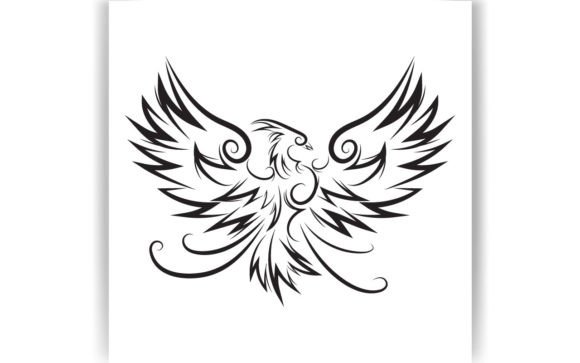
Decorative Eagle Tattoo Coloring Page
First Impression: Bold, Balanced, and Ready for Stitching
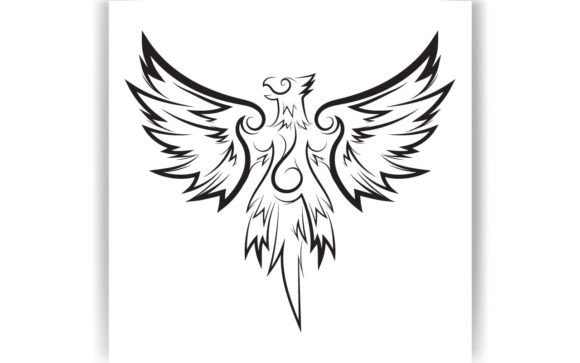
When I opened the Decorative Eagle Tattoo Coloring Page, my eye landed first on the eagle’s wingspan—strong but not overwhelming—and then on the fine linework that defines feathers, talons, and tribal-inspired flourishes. It’s not cartoonish, not overly ornate, and avoids cliché tattoo tropes like skulls or roses. Instead, it feels intentional: confident, grounded, and quietly symbolic. As a designer who’s stitched eagles onto everything from baby onesies to boutique aprons, I immediately saw its versatility—not as a standalone tattoo replica, but as a clean, scalable foundation for embroidery.
A Real-World Test: Embroidering It Onto a Linen Kitchen Towel
Last week, I used the Decorative Eagle Tattoo Coloring Page to create a limited-run set of embroidered kitchen towels for a local maker fair. I converted the SVG into a machine embroidery design using my standard digitizing workflow—no auto-trace needed, thanks to its crisp vector edges. The outline held up beautifully at 4.5 inches wide, with enough interior space to add subtle fill stitch texture without overcrowding. Customers responded strongly: “It looks handmade, not printed,” one said. Another asked, “Is this available as a patch?” That’s the sign of a design that reads well *after* stitching—not just on screen.
Where It Shines in Real Embroidery Projects
- Custom apparel: Works cleanly on sweatshirt cuffs, chest pockets, and sleeve hems—especially when scaled to 3–5 inches. The balanced negative space prevents stitch buildup on thicker fabrics.
- Tote bag design: Stitches crisply across canvas and cotton duck. The eagle’s central motif anchors the composition without competing with handles or seams.
- Baby embroidery: When simplified to a single-outline running stitch version (using the SVG as base), it reads softly on organic cotton onesies—no dense satin stitch required.
- Embroidered patch: Excellent candidate for heat-seal or sew-on patches. Its defined perimeter and moderate detail level translate reliably across twill and felt backings.
- Holiday and wedding gifts: Paired with neutral thread (charcoal gray, deep navy, or oatmeal), it reads timeless—not seasonal—making it ideal for anniversary handkerchiefs or groomsmen’s pocket squares.
Where to Proceed With Care
The Decorative Eagle Tattoo Coloring Page isn’t magic—it’s a strong starting point that rewards thoughtful execution. Here’s where attention matters:
- Small hoop sizes (under 4”): The wingtips and lower tail feathers may clip if scaled too aggressively. Always check your hoop boundary before loading.
- Textured or stretchy fabric: On ribbed knits or slub linen, tighten your stabilizer strategy—medium-weight cutaway works best. Avoid lightweight tear-away unless you’re stitching on stable cotton poplin.
- Dark fabric: The original line art doesn’t include internal shading cues, so choose thread colors deliberately. A warm brown or muted gold reads richer than black on charcoal heather.
- Curved surfaces (caps, curved pillow covers): The eagle’s symmetry helps—but test stitch on a cap blank first. The center chest area flows naturally; avoid placing the full wingspan across a crown seam.
- Frequent-wash items (tea towels, baby clothes): Confirm stitch density in feather details. Overly tight fills can stiffen fabric; opt for looser fill stitch or switch to satin stitch outlines for longevity.
What This Design Adds to Your Handmade Product
Using the Decorative Eagle Tattoo Coloring Page isn’t just about adding imagery—it’s about elevating perception. On an Etsy listing, it signals craftsmanship over print-on-demand. In a boutique, it reinforces brand cohesion when paired with earth-toned packaging and natural fiber goods. For craft fairs, it draws attention without shouting—its balance invites closer looking, which leads to longer dwell time and higher conversion. And because it sits comfortably in both masculine and gender-neutral spaces, it broadens your customer reach without requiring multiple SKUs.
Practical Notes Every Embroidery Designer Should Run Through
- Test the design on scrap fabric *first*—especially if using textured weaves or blends.
- Review thread color contrast in natural light *and* under store lighting—some grays shift blue or green on screen.
- Check small details (feather tips, inner eye line) at actual stitch size—what looks sharp at 200% zoom may vanish at 1x.
- Use proper stabilizer: cutaway for knits, tear-away for stable wovens, no-show for sheer layers.
- Confirm licensing terms before selling finished items or digital embroidery files—this is a Graphics asset, not pre-digitized embroidery, so your digitizing work determines commercial use rights.
- Try black-and-white mockups before finalizing—this design relies on shape and rhythm more than tonal variation, so grayscale previews reveal clarity issues fast.
- Compare how it reads on light vs. dark fabric backgrounds. The linework holds up well, but contrast choices affect perceived weight and age appeal.
Final Thought: A Design That Serves the Maker, Not Just the Screen
The Decorative Eagle Tattoo Coloring Page stands out in the Coloring Pages Amp category because it was built with intention—not just for coloring, but for translation. Its vector origins (EPS, AI, SVG, PNG, JPEG) mean it scales without degradation, and its Adobe Illustrator foundation ensures clean paths, consistent curves, and editable layers if you need to simplify or adapt. It won’t solve every embroidery challenge—but it gives you a solid, expressive anchor point. Whether you’re launching a new line of embroidered nursery decor, updating your Etsy shop with holiday-ready designs, or building custom apparel for a local business, this eagle doesn’t just sit on the page. It’s ready to land on fabric—with presence, purpose, and quiet confidence.